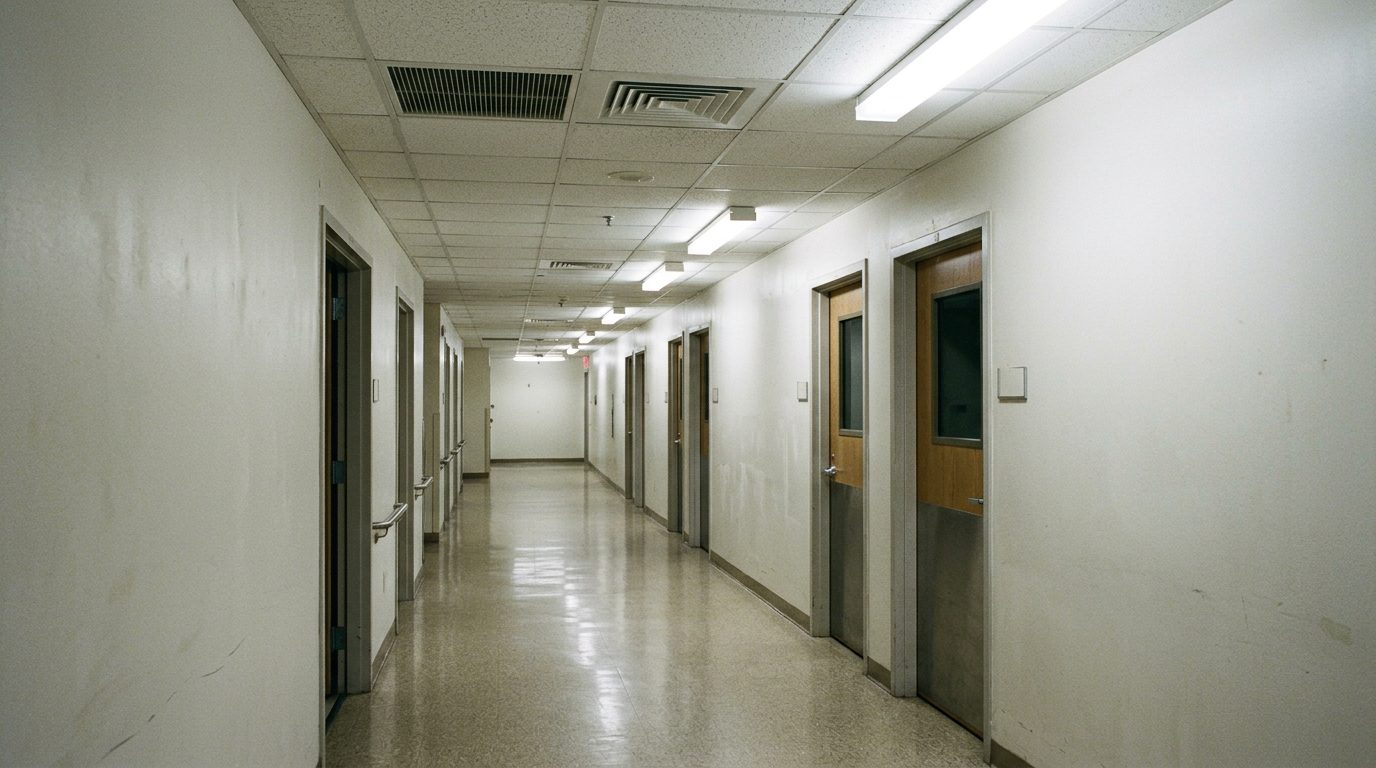
Hygiene and Indoor Environments
Cleaning happened. Did the environment actually improve?
RippleXn records the environmental conditions before, during and after cleaning, ventilation or remediation—so an organisation can show what changed and whether the monitored conditions returned towards normal.
Most hygiene records describe the work, not the result. The rota is signed, the inspection is logged, and the complaint arrives again the following week. A black box on the space records the environmental trace around each intervention: what the conditions were before, what changed during, and whether they returned towards the normal pattern afterwards.
The questions that follow
- ?Can a team be told while conditions are deteriorating, not after the complaint?
- ?When does the problem actually appear, and how often?
- ?Which zone is the pattern strongest in?
- ?Does it follow occupancy, cleaning, waste handling or ventilation?
- ?Did conditions improve after the intervention?
- ?How long did the improvement last?
- ?Is the complaint supported by the monitored record?
Be told while it is deteriorating. Show what changed afterwards.
Know a washroom is deteriorating before the complaint
Conditions in a monitored zone are sampled at short intervals, and a named person is alerted while there is still time to attend.
Catch a ventilation failure while the space is still occupied
Air movement, differential pressure, carbon dioxide and temperature watched together, with an alert when the space stops behaving normally.
Investigate recurring odour or chemical complaints
Establish when the pattern appears, where it is strongest and what activity it follows.
Connect cleaning activity to the environment
Compare the intervention record with changes in air, gases, particles or ventilation performance.
Identify persistent washroom, waste or drainage patterns
Separate a genuine recurring source from an occasional complaint.
Record whether ventilation or remediation worked
Show whether the environmental trace changed after the intervention, and for how long.
Direct teams to the location and time that need attention
Reduce repeated inspection based only on memory.
Preserve the response record
What was reported, who was alerted, what was done and what happened next.
What this does not do
- —RippleXn does not certify microbiological cleanliness.
- —It does not detect pathogens unless a separately validated laboratory method is used.
- —It does not replace hygiene audits, swabbing or infection-control procedures.
- —It does not prove that cleaning eliminated a biological hazard.
- —It records environmental change and the response around it.
Where this applies
What a qualified deployment can produce
- A baseline pattern for each monitored zone
- The chronology of each recurring event
- The intervention record placed on the same clock
- Whether the monitored parameters returned towards baseline
- The zone and time window that need attention
- What could not be established from the monitored record
A sensible first engagement
Indoor Environment and Hygiene Pilot
Typically 2–6 weeks, scoped to the building
A representative multi-zone deployment designed around a defined recurring problem, intervention or building-use pattern.
See how engagements workTechnical capability, when the question requires it
Open +
Depending on the question and the validated configuration, a deployment may connect the following. This is a menu, not a specification.
Not every deployment includes every parameter. The configuration is decided by the question, the site and what can be validated.
The second price tag
Cleaning that cannot be shown to have worked will be paid for twice — once in labour, and again in the complaint that follows.