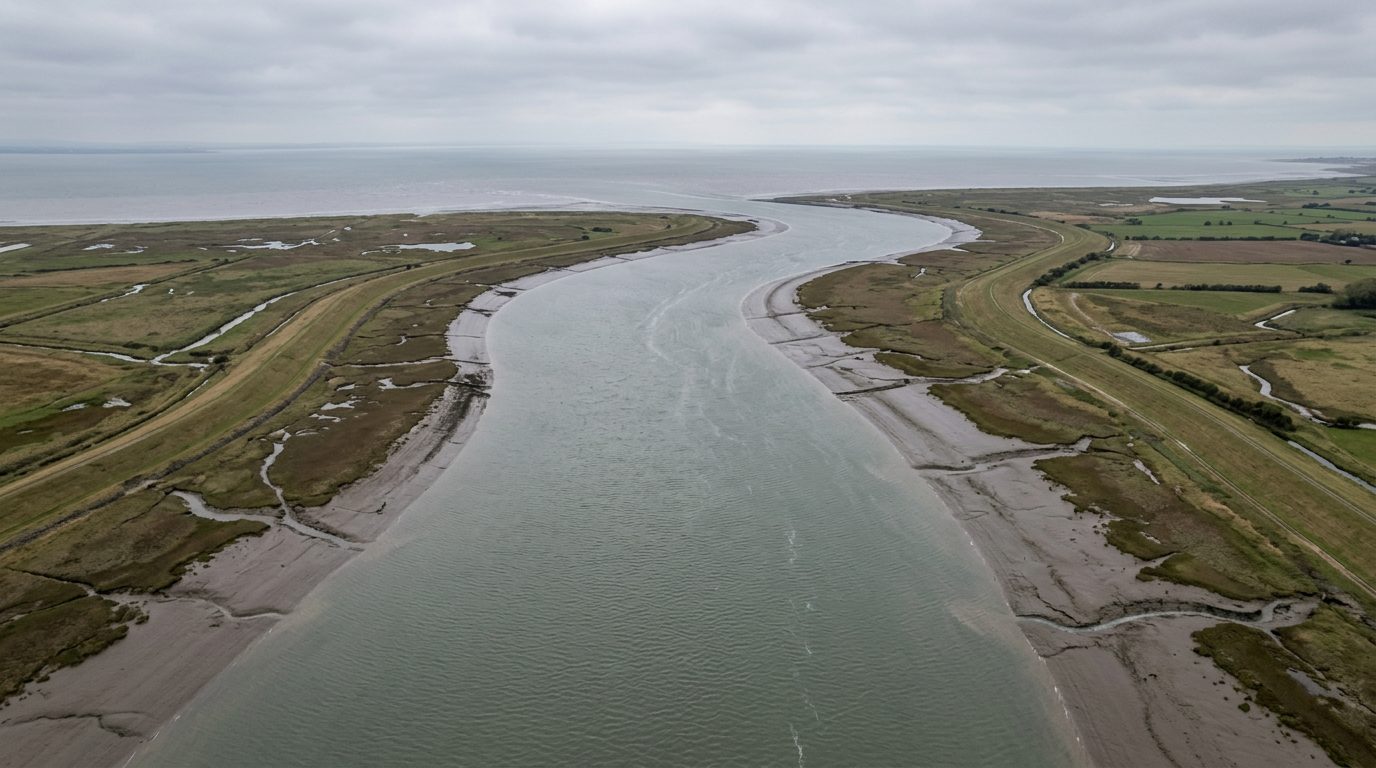
Water, Wastewater and Flooding
Catch the pollution before the plume disappears.
By the time a river changes colour or a smell reaches a village, the evidence that would have explained it is hours downstream and gone.
Environmental events announce themselves late. The moment anyone can see the problem is rarely the moment the problem began, and the interval between the two is where responsibility is decided. We connect environmental measurement with weather, upstream and downstream conditions, operational activity, community reports, inspections and the record of what was done. The aim is a chronology that starts before the visible event, not after it.
The questions that follow
- ?When did the condition actually start to change?
- ?Was the level rising before anyone was told?
- ?Did an overflow or discharge occur, and for how long?
- ?What was operating upstream at that hour?
- ?Did the weather move it, dilute it, or concentrate it?
- ?Did anyone report it before the instruments did?
- ?Which candidate sources are physically consistent?
- ?Which are less consistent with the monitored record?
- ?When did the organisation become aware?
- ?What was done, and was it fast enough?
Detect the change early. Preserve the evidence while it is still there.
Detect a developing change earlier
Watch for departure from the normal pattern instead of waiting for a visible event.
See rising level and flood risk while it is rising
Level, flow and rainfall on one clock, with an alert before a channel, culvert or storage tank is over.
Catch a discharge that lasts minutes
Short sampling intervals record the peak instead of averaging it away over the hour.
Compare upstream and downstream conditions
Narrow the reach in which the change first appeared.
Preserve a sample while the event is passing
Trigger sampling on the signal, not on the arrival of an inspector.
Alert the relevant team and record attendance
Keep the alert, the attendance and the intervention on the same clock as the measurement.
Narrow the time and candidate source area
Reduce a catchment-wide argument to a defined window and a short list of candidates.
State what could not be established
Set out plainly what the record supports and where it stops.
Where sensing stops and the laboratory begins
- —Sensors detect change. A preserved sample and an accredited laboratory may be required to identify an unknown substance.
- —An upstream and downstream pattern narrows the likely source area. It does not establish liability.
- —Detection is not prevention. Early warning buys time to act; it does not stop the event.
- —No monitoring programme can guarantee that every fish kill or flood is prevented.
- —Compliance and breach remain judgements for the relevant authority.
Where this applies
Who this is for
- Water and wastewater operators
- Environmental enforcement and local-authority teams
- Fisheries, catchment and river bodies
- Flood risk and drainage officers
- Waste, landfill and treatment operators
- Industrial sites with a river, sewer or air boundary
- Developers and contractors working near sensitive receptors
- Insurers and legal advisers acting on an environmental event
The specific problems we investigate
- Intermittent odour reaching homes or a village
- A fish kill or developing stress in a river
- A short discharge that had passed before anyone attended
- Rising level, overflow or flooding that nobody was warned about
- Recurring illegal discharge or dumping
- Boundary noise, vibration or dust attributed to a site
- Whether an intervention actually returned conditions towards baseline
- An event where samples, records and alerts must be preserved
What a qualified deployment can produce
- A defensible chronology of the event on one clock
- Upstream, boundary or reference comparison where the deployment supports it
- Weather, flow and dispersion context
- Operational records for the same window
- Human reports aligned to the measured record
- The alert, attendance and intervention chronology
- Preserved samples and laboratory coordination where included
- A written statement of anything that could not be established
What the evidence cannot establish on its own
- The identity of an unknown substance without accredited laboratory analysis
- Legal causation or liability
- Compliance or breach, which is a judgement for the relevant authority
- Anything reliable from sampling, calibration or handling that was not professionally specified
- The condition of a location or period that was never monitored
Wastewater and treatment works
If you run a treatment works, the argument is usually about odour at the boundary and what left the site.
Wastewater sites carry two recurring disputes: the smell neighbours report, and the discharge or overflow somebody says happened. Both are short-lived, both are gone by the time anyone attends, and both are decided on whatever record exists. A Black Box on a treatment works watches odour and gases at the boundary, level and flow at the point of concern, and the weather that moved it — then tells a named person while it is still happening.
- —Odour and hydrogen sulphide at the site boundary, sampled in seconds rather than averaged over the hour
- —Storm overflow and rising level watched with an alert before it is over
- —Discharge to a receiving water recorded with the weather and the operation that hour
- —Community reports placed on the same clock as the measurement
- —The intervention and whether conditions returned towards normal
A sensible first engagement
Environmental Evidence-Gap Snapshot
From €1,500
We map what your current records and monitoring could establish about one event or one recurring complaint, identify the material gaps, and recommend a proportionate deployment.
See how engagements workProblems investigated in this sector
Technical capability, when the question requires it
Open +
Depending on the question and the validated configuration, a deployment may connect the following.
Not every deployment includes every parameter. The configuration is decided by the question, the site and what can be validated.
The second price tag
Recording a change early is a predictable cost. Ecological damage, enforcement, and a dispute about who caused it are priced by other people.