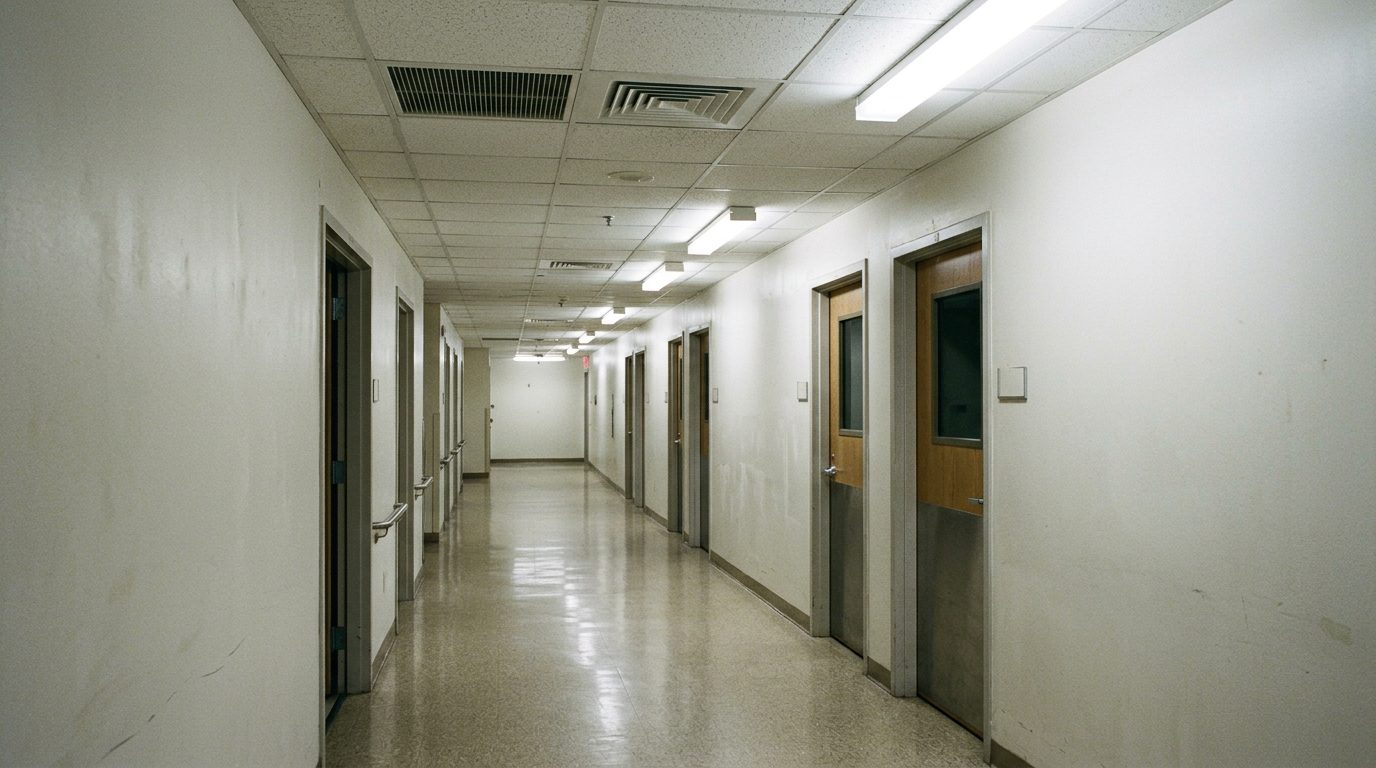
Hospital environmental conditions
The notes describe the patient. Nobody described the room.
RippleXn reconstructs the physical conditions surrounding an environmental incident — air, ventilation, occupancy, activity, staff observation and response — without making a medical diagnosis.
What we investigate
We reconstruct what the room was doing: its normal pattern, what departed from it, what activity coincided with the change, who noticed, what was done and whether conditions returned towards baseline.
Why these reports are so hard to close out
Clinical records are meticulous about care and silent about conditions. Building management systems record setpoints and faults but are rarely interrogated by hour. Staff notice things they have no obvious place to write down.
So a recurring report — an odour on the early shift, a room that feels wrong, a smell nobody can place — is investigated by asking people to remember. Estates cannot show what the ventilation was actually doing at 07:40 six weeks ago, and occupational health cannot rule anything in or out from a recollection.
The result is a report that is neither substantiated nor dismissed. It stays open, it recurs, and each recurrence starts the same conversation from the same standing start.
An illustrative event chronology
The room was within its normal pattern until 07:40, when air changes per hour fell without an alarm. Carbon dioxide and humidity moved with the reduction and held. Nineteen door openings were logged in the following hour. A midwife reported the room as stuffy at 09:20. Particle counts remained inside range. Ventilation was restored at 11:05 and conditions moved back towards baseline.
Illustrative reconstruction. Not a measured RippleXn deployment.
A composite written to show the shape of a chronology, not a deployment RippleXn has run. Note what it does not say: it does not diagnose anyone, it does not name a cause, and the in-range particle count is recorded because ruling something out is as useful as ruling it in.
What a qualified deployment can produce
- A room or area baseline
- A chronology of physical change
- Relevant building-management and ventilation records
- Human observations aligned to measurements
- Maintenance, cleaning or operational activity
- Alert and response timing
The principal limitations
- RippleXn does not detect infection or pathogens
- It does not make a medical diagnosis
- It does not replace occupational-hygiene assessment
The specific problems we investigate
Open +
- Recurring chemical or unusual odours
- Ventilation performance or air-change deterioration
- Formaldehyde or other occupational exposure where validated instrumentation has been specified
- Cleaning or decontamination events
- Sewage or waste-related odours
- Particles and dust during adjacent construction
- Unexplained staff reports
- Environmental conditions surrounding a defined incident
What the Black Box connects in a hospital environment
Open +
Where occupational exposure is in question — formaldehyde, for example — validated instrumentation must be specified for that purpose. RippleXn describes the room. It does not describe the patient.
What this can and cannot establish
Open +
What it can establish
- The normal pattern for a room or area, and what departed from it
- Whether ventilation was performing as configured, and from when
- Which cleaning, maintenance, decontamination or construction activity coincided with a change
- Whether staff reports align with measured conditions, precede them or follow them
- How long elapsed between a measurable change and any recorded response
- Whether conditions returned towards baseline afterwards
- That a suspected condition was not present — ruling out, on the record
- Whether the same pattern recurs in the same space
What it cannot establish on its own
- RippleXn does not detect infection or pathogens
- It does not make a medical diagnosis
- It does not replace occupational-hygiene assessment
- It does not replace certified medical-gas or life-safety alarms
- It does not prove that an environmental condition caused a clinical outcome
- It cannot describe a room, or a period, that was never monitored
Who this is for
- Estates and facilities
- Occupational health
- Health and safety
- Pathology and laboratory management
- Decontamination and sterile-services management
- Capital-project and construction teams
A sensible first engagement
Hospital Environmental Exposure Snapshot
From €1,500
We take a representative ward, department or defined environmental concern and establish what the estate can currently prove about it — with a deployment that can expand across the estate. Existing building-management and monitoring records are mapped, a preliminary chronology is built where the data allows, and the gaps that would matter in a formal review are identified.
See how engagements workRelated problems and sectors
The second price tag
Describing the concern costs a known amount. An environmental report that stays open for two years costs the recurrence, the staff confidence and whatever a formal review decides it costs.